

Anyone who wants to be successful in the future should ensure that there is a future.
Apparently, there are still companies that view sustainability and profitability as separate issues. For us, however, the two go hand in hand.
On the one hand, many parents work here and we are thinking about our children’s future. And on the other hand, there will be no economy on an uninhabitable planet – we can guarantee that.
Small and large-scale measures for sustainability
Talk is silver, action is gold
Rather than simply transferring money to some organisation or other, we prefer to roll up our sleeves and get stuck in ourselves. Ideally, right here in our own neighbourhood in Hamburg.
Our sustainability initiatives

Desktop PC users may only notice them later, whereas laptop users spot them straight away: Energy-saving options. However, it is not only the desire for the longest possible battery life that makes this function indispensable; from an environmental perspective, too, an optimal setting certainly makes sense.
What’s worse than ‘stand-by’? ‘Stand-ready’!
The built-in standby mode on modern electronic devices has rightly fallen into disrepute, as it causes the electricity meter to tick over slowly but steadily, even though nobody is actively using the devices. However, the real energy guzzler is the ‘stand-ready’ mode of devices which – despite the user’s inactivity – do not even switch to standby mode, but continue to run at full power. In an office setting, this naturally applies first and foremost to team members’ work computers.
In May 2021, hsp launched an awareness campaign on this topic, which significantly reduced the number of office computers entering standby mode, thereby cutting energy costs and helping the environment. By skilfully fine-tuning the optimal settings, we managed to reduce the average time it took for office computers to switch to energy-saving mode by a substantial 68%. The before-and-after comparison is even more positive when it comes to screen time-outs: without disrupting staff’s workflow, we were able to reduce the time it took for monitors to dim automatically by a massive 85%.
This shows that even small and simple steps can help to make a contribution to environmental and climate protection.
Average number of minutes elapsed before energy-saving mode is activated (Previously)
Average number of minutes elapsed before energy-saving mode is activated (Later)
Average number of minutes elapsed until the screen times out (Previously)
Average number of minutes elapsed until the screen times out (Later)
Since autumn 2019, we at hsp have been practising a complete move away from paper for both outgoing and incoming documents. This means we consistently leave the printer switched off, and our suppliers have also switched to paperless communication and learnt that we no longer accept paper. This measure not only fits in perfectly with our commitment to digitalisation, but also saves a great deal of resources and reduces CO₂ emissions significantly.
In the three years leading up to the initiative, our office emitted approximately 381.3 kg of CO₂-equivalent air pollutants emitted as a result of the electricity consumption involved in printing processes, paper production and the manufacture of printing consumables (ink, toner, printers). These production costs also resulted in 2,264 litres of waste water, which requires extensive treatment.
By going paperless, hsp can therefore avoid the following environmental costs each year:
- 25.77 kg of CO₂-equivalent air pollutants
- 5.83 kg CO₂ because the paper was not printed on
- 95.5 kg CO₂ due to the energy not being consumed in the production of the propellant
- 754.67 litres of waste water that would require extensive treatment
One of the greatest challenges of our time is the enormous amount of plastic waste. To do our bit to help reduce it, we have switched all our purchasing to products packaged with as little plastic as possible.
When selecting drinks for our visitors, we therefore avoid plastic bottles and lids entirely. In addition, we have installed a state-of-the-art water filter and dispenser, which provides fresh drinking water around the clock without any plastic waste.
In some areas, however, we cannot avoid using plastic packaging. Whilst we are constantly looking for plastic-free alternatives in these areas, we ensure that any plastic waste produced is channelled into the recycling cycle.
Conventional cleaning products are harmful to the environment. According to the report, household detergents and cleaning products alone account for Federal Environment Agency More than 500,000 tonnes of chemicals are discharged into wastewater every year, including many surfactants, polycarboxylates, phosphonates, enzymes and silicones.
The proportion of components that are not easily degradable is steadily increasing, and many of the ingredients are suspected of to cause asthma, cancer or other illnesses.
This is reason enough for hsp to take action on this front as well. That is why we use only environmentally friendly and more readily biodegradable organic cleaning products when cleaning our premises.

Even in the most sustainable companies, waste is almost impossible to avoid. However, all staff can do their bit to minimise the impact on the environment.
It goes without saying that we sort paper, packaging waste and other types of waste for disposal. However, with soiled packaging and complex composite materials, it’s all too easy for items to be sorted into the wrong bin. That’s why a campaign has been launched to raise awareness amongst all staff about which types of waste need to be disposed of in which way.
Whilst some people would still prefer to travel around by horse-drawn carriage, we have chosen to look to the future. We have therefore gradually converted our entire fleet to electric vehicles and have been driving entirely on electric power since 2024.
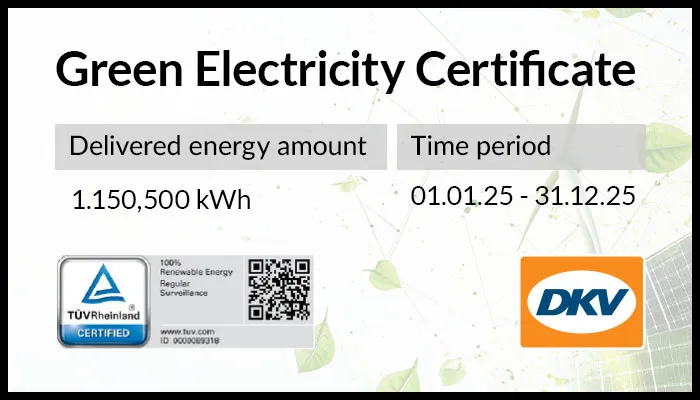
In addition, four of our underground car park spaces are fitted with wall boxes. Using DKV charging cards, our vehicles are charged entirely with green electricity. This means we no longer have to make any compromises, even when we’re away from the office.
Of course, we still love sparkling water, but as part of our sustainability efforts, we introduced drinking water dispensers in June 2023. These are intended to serve as a carbon-neutral alternative to conventional water crates.
Why this change? Germany has some of the highest-quality drinking water in the world. We are therefore now offering still water straight from the tap or via a special filtration system at our drinking water dispenser. In addition, our staff can choose between lightly carbonated and heavily carbonated water, available both chilled and at room temperature.
This measure contributes to our sustainability strategy, in particular to reducing our CO₂-footprint. Whilst the production of bottled mineral water is generally CO₂-neutral, but significant CO₂ emissions are generated₂-emissions during transport from the source to the wholesaler, from the wholesaler to the retailer and, finally, from the retailer to the office. By switching to drinking water dispensers, we minimise these transport costs and thus contribute to climate protection.
Why does society keep talking about „Climate“protection’? It is not the climate that needs protecting, but people. It is we who are under threat. Because the fact is: If we carry on like this, we won’t survive, no matter how rich, privileged or well-motorised we are. So let’s talk about Peopleprotection.
Accordingly, it is absurd and out of touch with reality to destroy the environment for the sake of the so-called „economy“. There will be no economy on a planet that is hostile to life. As a Hamburg-based high-tech company committed to innovation, we hold ourselves to the standard of structuring our business in such a way that we can continue to operate successfully tomorrow. This also means ensuring we do not become extinct.
That is why we are not resting on our laurels with the measures we have already implemented. We are always on the lookout for further ways to increase our contribution to protecting the environment and people.





 German
  English